
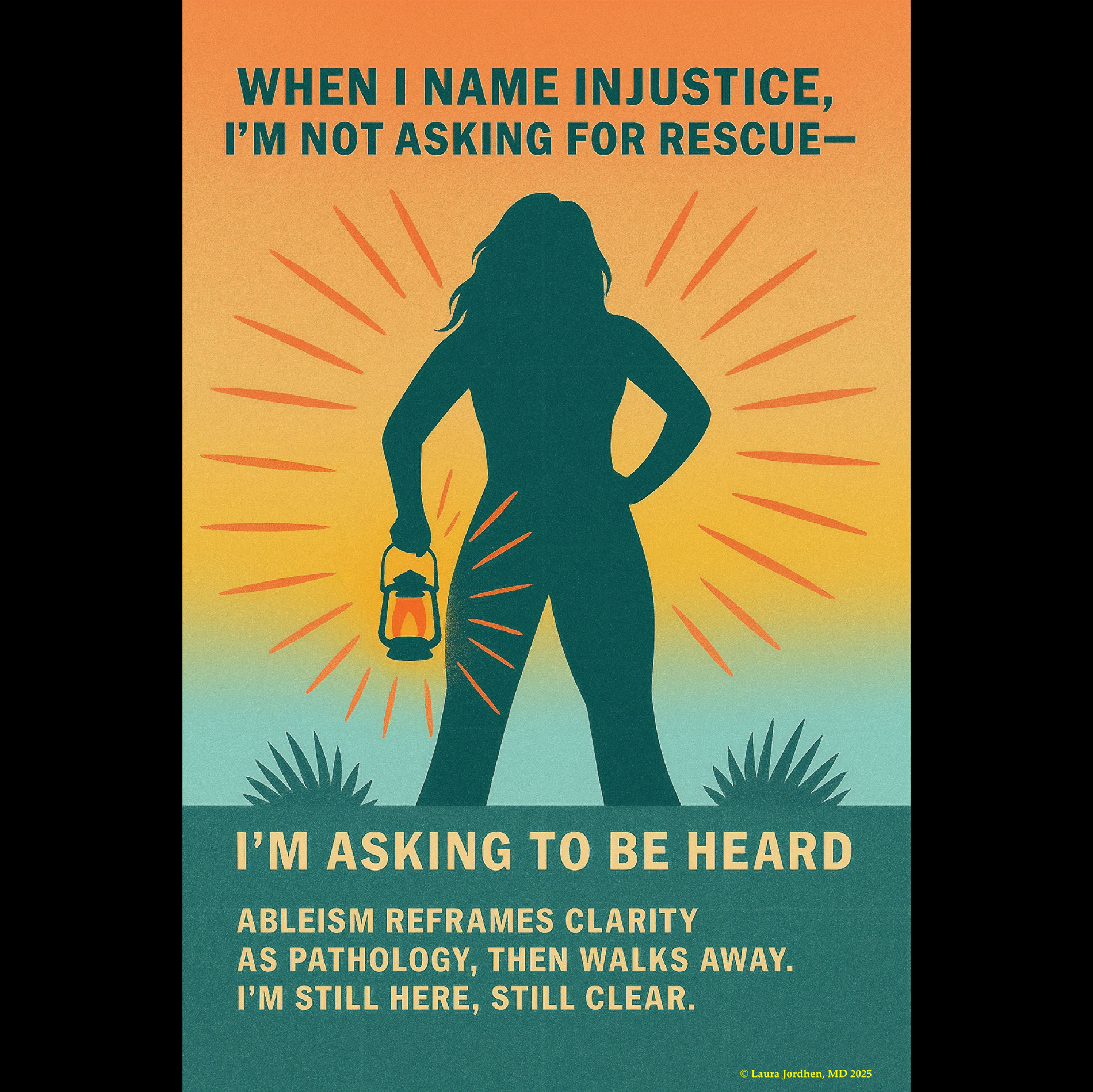

You name the harm (“this feels unjust.”)
They reframe it as pathology (“you need help.”)
Then they withdraw (“but I can’t help you, so please stop.”)
Does this sound familiar?
When I was living with significant depression, people sometimes made decisions about me, not with me. I expressed my dismay, but my words were obscured by my illness. This was especially painful when coming from people in the healing professions.
When you struggle with the symptoms of a significant illness, it’s hard to speak with clarity and equanimity. The message you are trying to send comes in some difficult packaging, and not everyone wants to open it. It is common to feel unheard and dismissed. You don’t deserve it.
I also have my biases and blind spots. Self-awareness is a skill that helps me move beyond them. I also ask you to reflect: when a patient, a colleague, a direct report seems too “sensitive,” “unprofessional” or “hormonal,” is it possible you are avoiding the discomfort of examining your own biases and taking accountability for them?